
Creating Interiors with Depth and Dimension
Ask most people what gives a room depth and they will point to color. A dark accent wall, a moody paint choice, something to make the space feel less flat. Color has its place, but it is rarely what makes a room feel rich when you actually sit in it. Depth comes from somewhere quieter: the way light falls through a tall window, the weight of an old mirror against a plain wall, the friction of a pattern that should not work next to another one but does. It is a matter of layering, not decorating, and it takes longer to get right than a coat of paint ever could.
A room can be perfectly composed and still feel flat, and a room can be a little imperfect and feel wonderfully alive. The difference usually comes down to how many layers are working at once, quietly, without calling attention to themselves. Light doing something different at ten in the morning than at dusk. A texture that only reveals itself up close. An object with a past that nobody explains out loud but everybody senses. None of this shows up on a mood board. It shows up in the room itself, over time, which is exactly why it is worth slowing down for.
Scale is often the first layer, and the easiest to overlook. A room with real height asks for something that meets it. In a dining room with soaring windows and pale linen drapery pooling at the floor, two oversized starburst chandeliers do the work that a single central fixture never could — they give the eye somewhere to travel on the way up, so the ceiling stops feeling like an afterthought and becomes part of the room. Boucle chairs in a deep rust hold the other end of the scale, low and soft against a table with real presence. None of it depends on a bold color story. The drama comes from proportion: tall against low, delicate spikes of brass against a solid wood table, sunlight doing more of the work than any single design choice could.
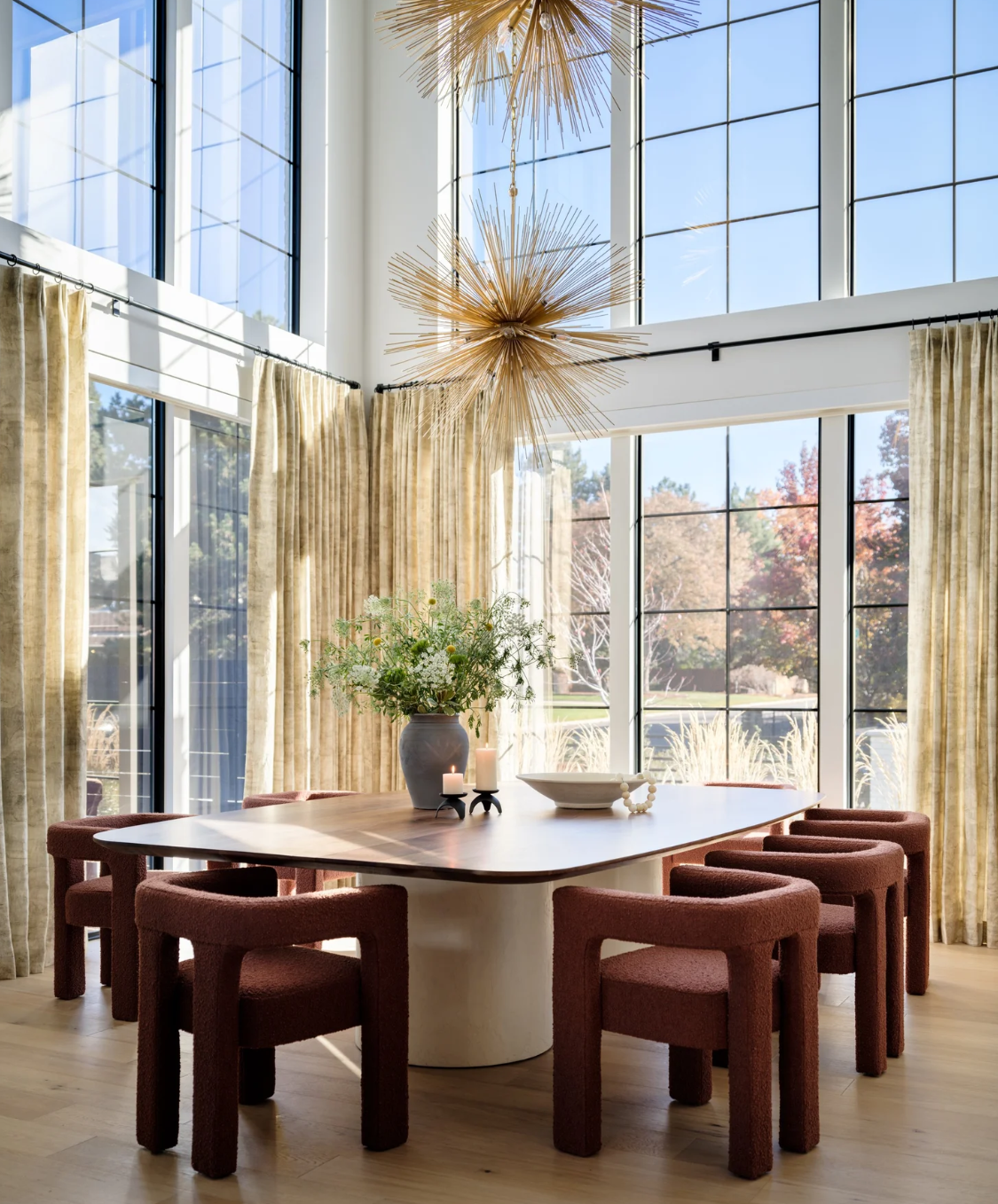
Dining Room, Jaqui Seerman Design
Depth can also come from restraint, which is its own kind of layering. A bedroom done almost entirely in soft pink and lavender could easily read as flat if it stopped there. What keeps it from feeling like a single note is what sits against that palette: a trio of antique gilt mirrors, warm and slightly uneven with age, hung close together on the wall behind the bed. A brass pendant, faceted rather than smooth, catches the light differently depending on where you stand in the room. The furniture is new and quietly upholstered, but the mirrors carry history into the space, and it is that contrast, soft newness against something that has clearly lived a life before this room, that gives the palette its weight. Without it, the softness would be pretty. With it, the room has a bit of tension, which is what keeps a quiet space from feeling sleepy.
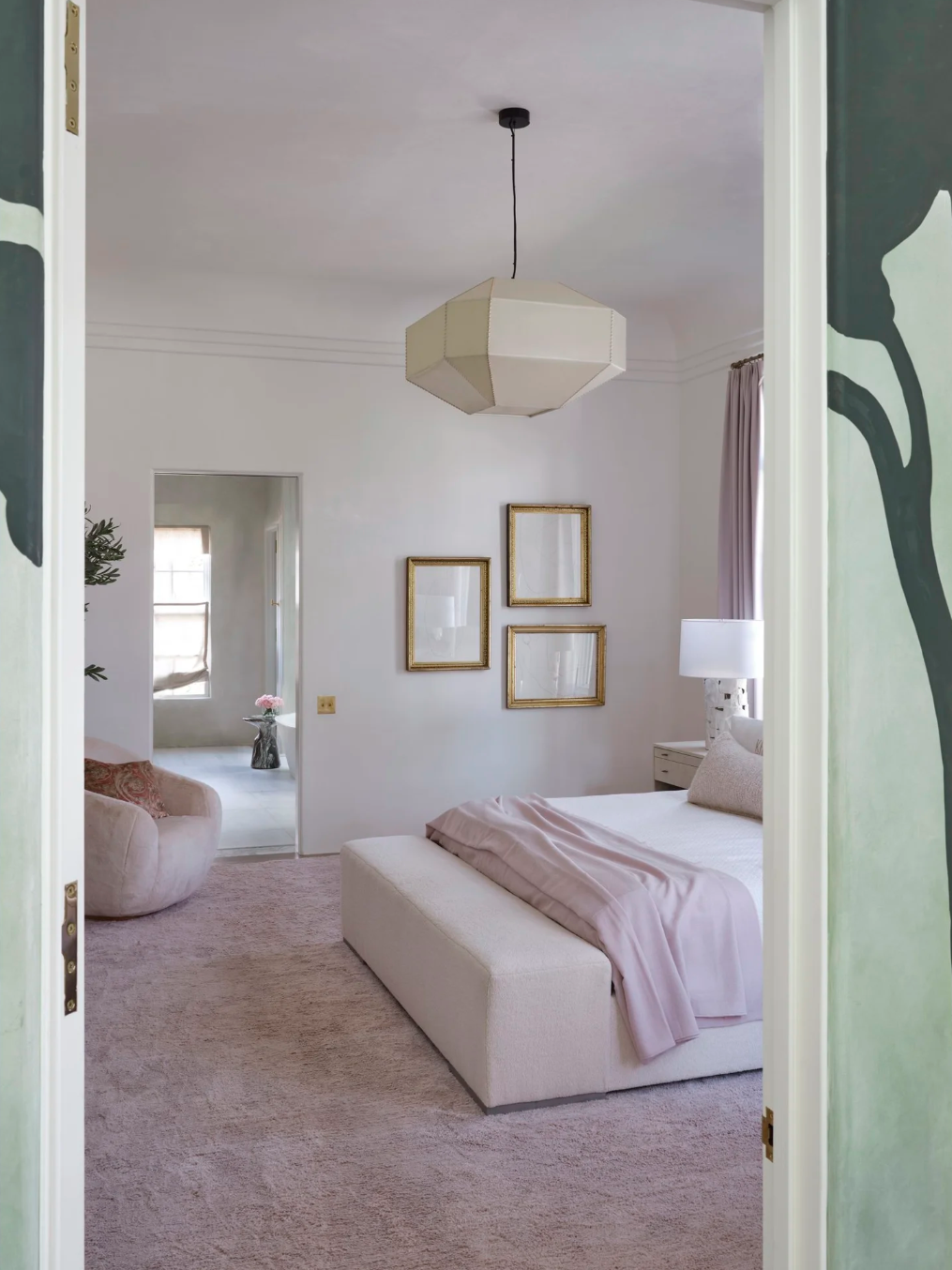
Bedroom, Melanie Turner Interiors
The fullest expression of this idea shows up in rooms that refuse to resolve into one clean look. A living room built around a veined marble mantel, carved and clearly old, does not try to match everything else to its era. Mid-century bentwood chairs in denim blue sit near a floral sofa that could be decades newer, and a plaid ottoman layered with a block-print throw sits in the middle of it, doing nothing to smooth over the differences. A branch of green leaves in a glass vessel adds one more texture, loose and unstyled, next to a coffee table worn from actual use. This is the kind of room that could not have been bought in a single order. It reads as collected, because it was, and that sense of time passing is exactly what separates a room with depth from one that is simply well matched. European interiors have always understood this instinct: nothing needs to be from the same decade to belong in the same room, as long as each piece earns its place.
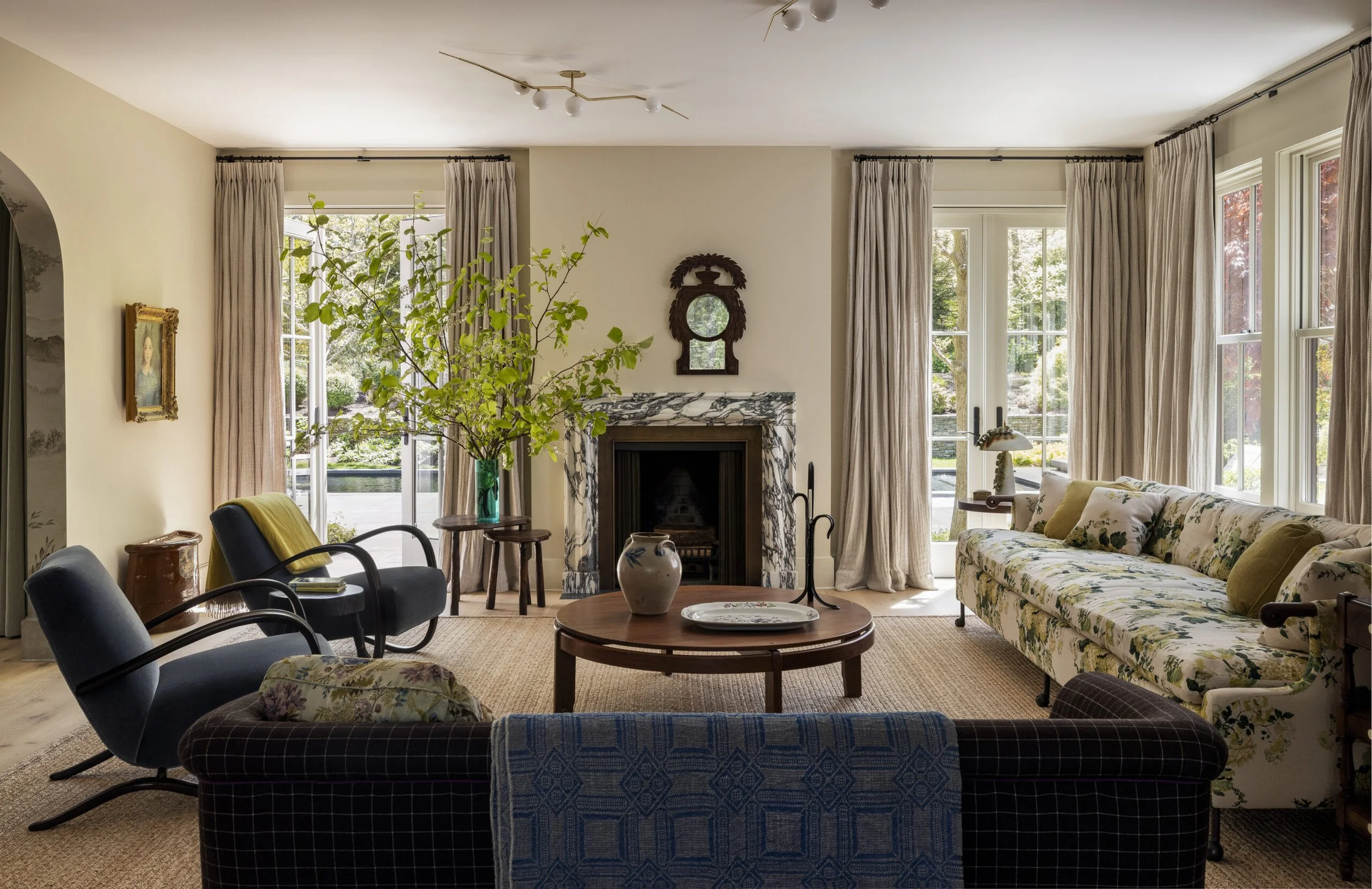
Living Room, Heidi Caillier Design
What ties these rooms together is not a shared palette or a common source of furniture. It is the willingness to let a space hold more than one idea at once — height against intimacy, softness against age, order against a bit of visual friction. That is harder to achieve than picking a color scheme, and it takes longer, because it means resisting the urge to make everything match. But it is also what makes a room feel like it belongs to the people living in it rather than a showroom. Depth, in the end, is just another word for a room that was given time to become itself.