
How Material Selection Affects Everyday Wellness
Wellness, in most homes, gets treated as a room. A steam shower, a meditation corner, a shelf of supplements by the sink. All useful, none of them the whole story. The truth is quieter and much less expensive to notice: wellness at home has as much to do with what a room is made of as what happens inside it. The wood underfoot, the stone in a bathroom, the weight of a curtain, these are the things a body reads before the mind has a chance to form an opinion. They shape how calm or unsettled a home feels, day after day, whether or not anyone is paying attention.
Underfoot: what flooring tells the body
Long before a room registers as beautiful or plain, the feet have already made up their mind. Warm reclaimed wood underfoot reads as safety and ease; cold tile in the wrong place reads as clinical, even when it's handsome. This is one of the more overlooked truths in natural materials interior design: flooring sets the emotional register of a room before furniture, color, or light ever enter the conversation.
In a recent Central Park West project, the choice was a European parallel stacked wood floor, unfussy, warm underfoot, and durable enough to hold up to decades of daily life without losing its character. It's a good example of how flooring affects how a room feels in a very literal sense: the material does quiet, constant work, softening a high floor apartment that could otherwise feel closed off from the ground far below.
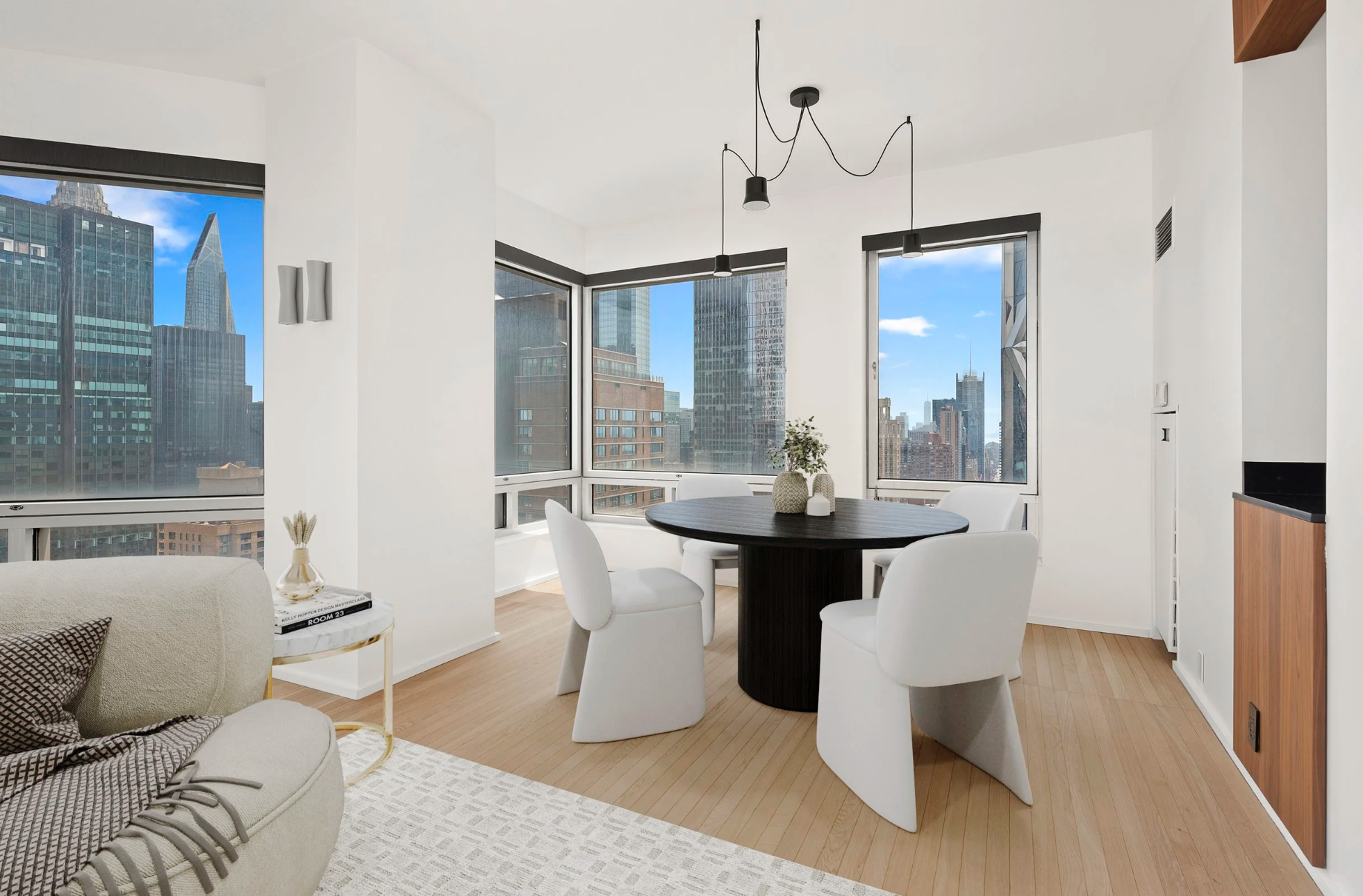
Central Park West Residence
Stone works differently, and on purpose. In a primary bathroom, a cool marble or limestone floor signals a shift: this is a room for slowing down, not rushing through, the same way a change in temperature underfoot tells the body it has crossed into a different kind of space. Good material selection isn't only about matching a palette. It's about deciding, room by room, what feeling the floor should hand the body as it walks in.
What the hand remembers
Textiles do a version of the same work, at closer range. Linen, wool, and mohair age the way skin does, softening, developing character, becoming more comfortable to be near with time. Synthetic fibers, by contrast, tend to stay exactly as they started: technically intact, but a little inert, a little cold to the touch no matter the season. A homeowner may never articulate why a linen slipcover feels more restful than a poly-blend one, but the hand knows before the mind catches up.
This is part of why natural fiber upholstery and drapery are worth the investment beyond how they photograph. A wool bouclé chair or a washed-linen curtain earns its place in a room daily, not just on the day it's installed. It's there to be touched, sat in, leaned against, and it should reward all of that contact rather than merely survive it.
Light, surface, and the feel of a room through the day
Surface finish changes how light behaves in a room, and light is one of the most direct levers on mood a home has. A hand-troweled Venetian plaster wall catches light in soft, uneven variations that shift with the hour; a flat painted wall reflects the same light evenly and, often, a little flatly. Neither is wrong, but they produce very different feelings across a day, one restless and alive, the other calm and consistent, and knowing which a room needs is part of the craft.
Marble does something similar in its own register. Its veining is never uniform, which means the same slab can look cool and quiet in morning light and warmer, almost golden, by evening.
In a recent Upper East Side apartment, a similar instinct shaped the primary bathroom, where tadelakt, poured concrete, and warm wood were used together to build a space with the plainness of a monastery and the comfort of a favorite room. Nothing about it reads as spa-branded or trend-driven; it simply feels calm to stand in, which is a harder thing to design for than it sounds.
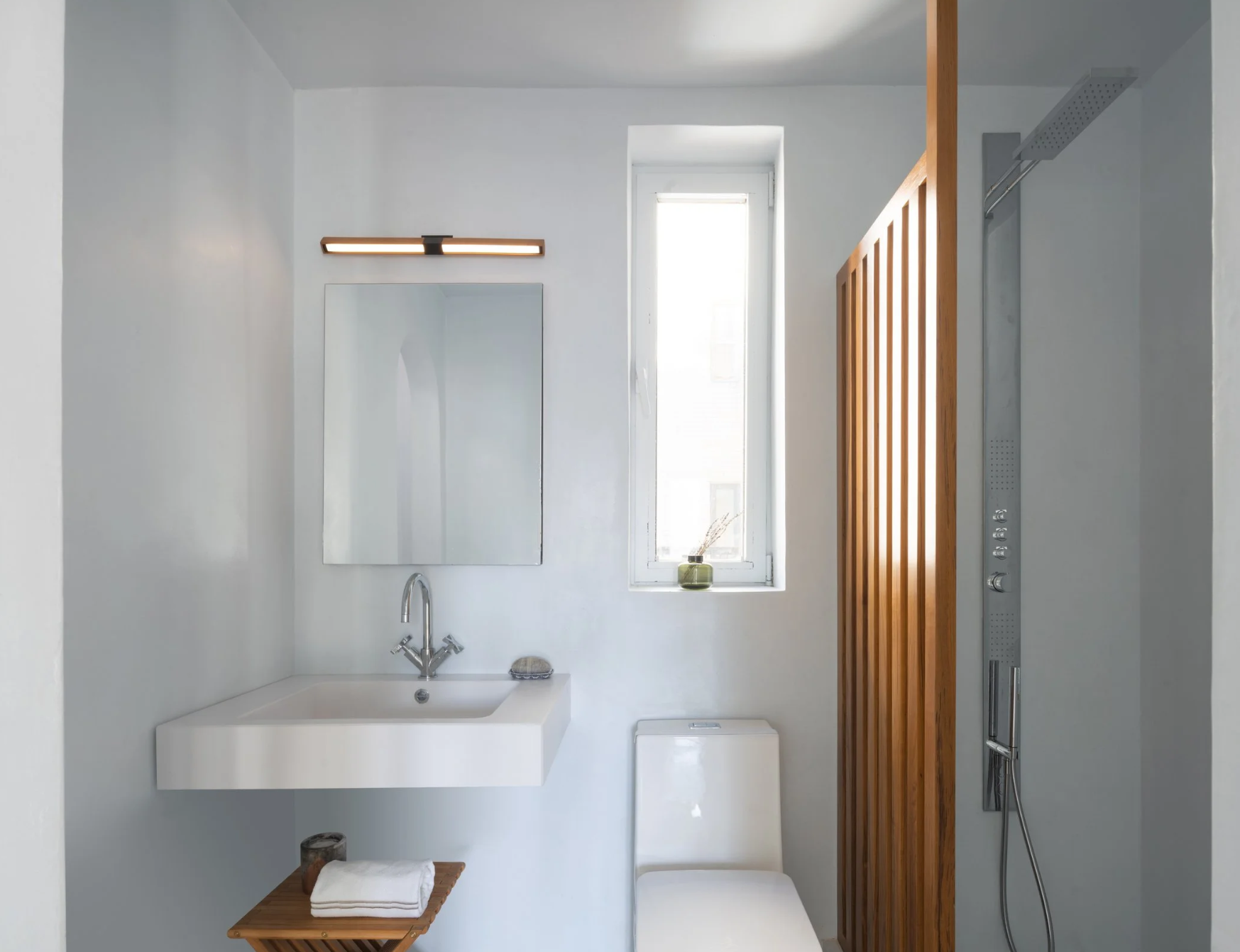
Upper East Side Residence
Air, honesty, and materials that don't need replacing
There's a quieter argument for natural, well-sourced materials that has nothing to do with how a room looks: they tend to be kinder to the air inside a home and to the people breathing it. Solid wood, natural stone, wool, and limewash finishes are chosen as much for what they don't do, off-gas, break down, need replacing every few years, as for what they add. That's not a certification or a checklist. It's closer to an old habit of choosing things built to last, because a home made of honest materials asks less of the people living in it over time.
A byproduct, not a feature
None of this requires a wellness room, a device, or a program to follow. It asks for something slower and, in some ways, harder: choosing materials early, with real attention to how they'll feel to a hand or a foot every single day for years, rather than how they'll photograph on the day the project wraps. A home built this way doesn't announce its wellness credentials. It simply feels good to be in, which was the point all along.